Echoes of the Past
I stopped writing blogs for a while because it seemed like it wasn’t accomplishing anything, and I didn’t want to waste my time. After the Hanukah massacre in Bondi Beach, Australia, I wrote this post but I never sent it out. However, a few days ago something happened 35 minutes from my home, and I knew I had to say something.
Two men were having lunch at a restaurant in Santana Row, San Jose, and were violently attacked, one to the point of unconsciousness. Their crime? They were overheard speaking Hebrew. Not only were they beaten senseless, but no one intervened, not a single person stood up to help them.
As I write this there is an active shooter at Temple Israel in West Bloomfield, Michigan—the largest reform synagogue in the country. The synagogue is full of children, teachers and staff.
***
I recently heard a woman describe the scale of online harassment directed at Jews as a kind of “digital Holocaust.” The phrase is provocative, but it captures something real: a new medium amplifying an old pattern.
Across podcasts and social media platforms including X, Instagram, TikTok, YouTube and more, openly antisemitic rhetoric has been circulating without restraint. Jews are routinely targeted with threats, Holocaust imagery, and conspiracy narratives; messages telling Jews to “get ready for the ovens” or invoking Nazi language appear regularly in comment sections and direct messages. Influencers, streamers, and political commentators (including Tucker Carlson, Candace Owens, Nicholas Fuentes and Hasan Piker) with large audiences frequently amplify these themes, while viral videos and live-streams spread them even further.
“This is not a rise in antisemitism. It is a pandemic of Jew-hatred. Calling what we are seeing a “rise in antisemitism” minimizes the reality: an ideological contagion that is spreading across movements, platforms and demographics with alarming speed.” -Yashar Ali
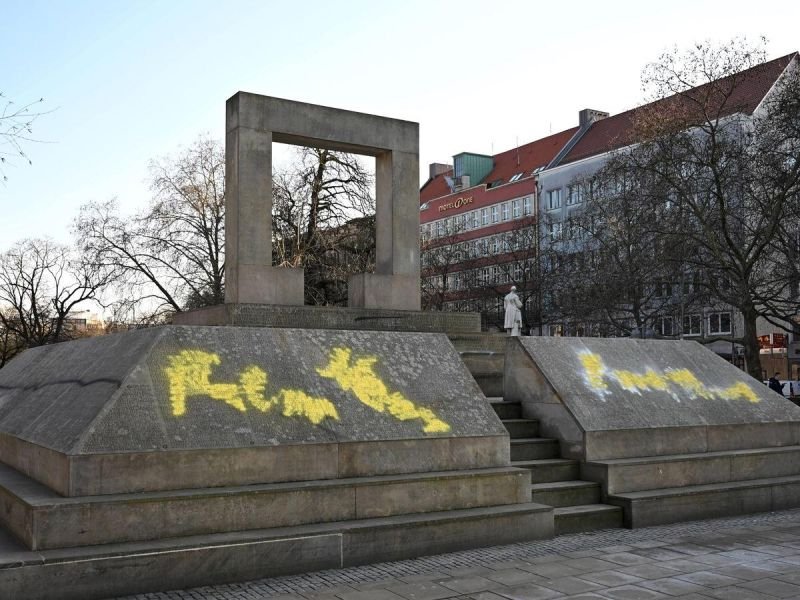
Antisemitic graffiti defaces the Holocaust memorial, Hanover, Germany, March 2026
In the 1930s, antisemitism did not begin with violence. It began with pamphlets, cartoons, and propaganda portraying Jews simultaneously as weak and parasitic and as secretly powerful conspirators controlling money, media, and governments. People could dismiss them as jokes, exaggerations, or merely political speech. But these messages circulated widely enough that they slowly reshaped public norms.
Over time the rhetoric hardened into policy and exclusion. Jews were pushed out of professions, academia, cultural life, and public institutions. Boycotts, vandalism, and street harassment became increasingly tolerated. What began as propaganda and ridicule gradually normalized the removal of Jews from academic, institutional, and cultural spaces.
Once exclusion became normalized, rejection and violence became easier to justify. Sporadic assaults, vandalism, and harassment were often minimized or treated as isolated incidents rather than recognized as part of a larger pattern.
Historically, antisemitism did not erupt all at once into mass violence. It moved step by step: propaganda, exclusion, normalization of hostility, and then increasingly overt acts of intimidation and violence.
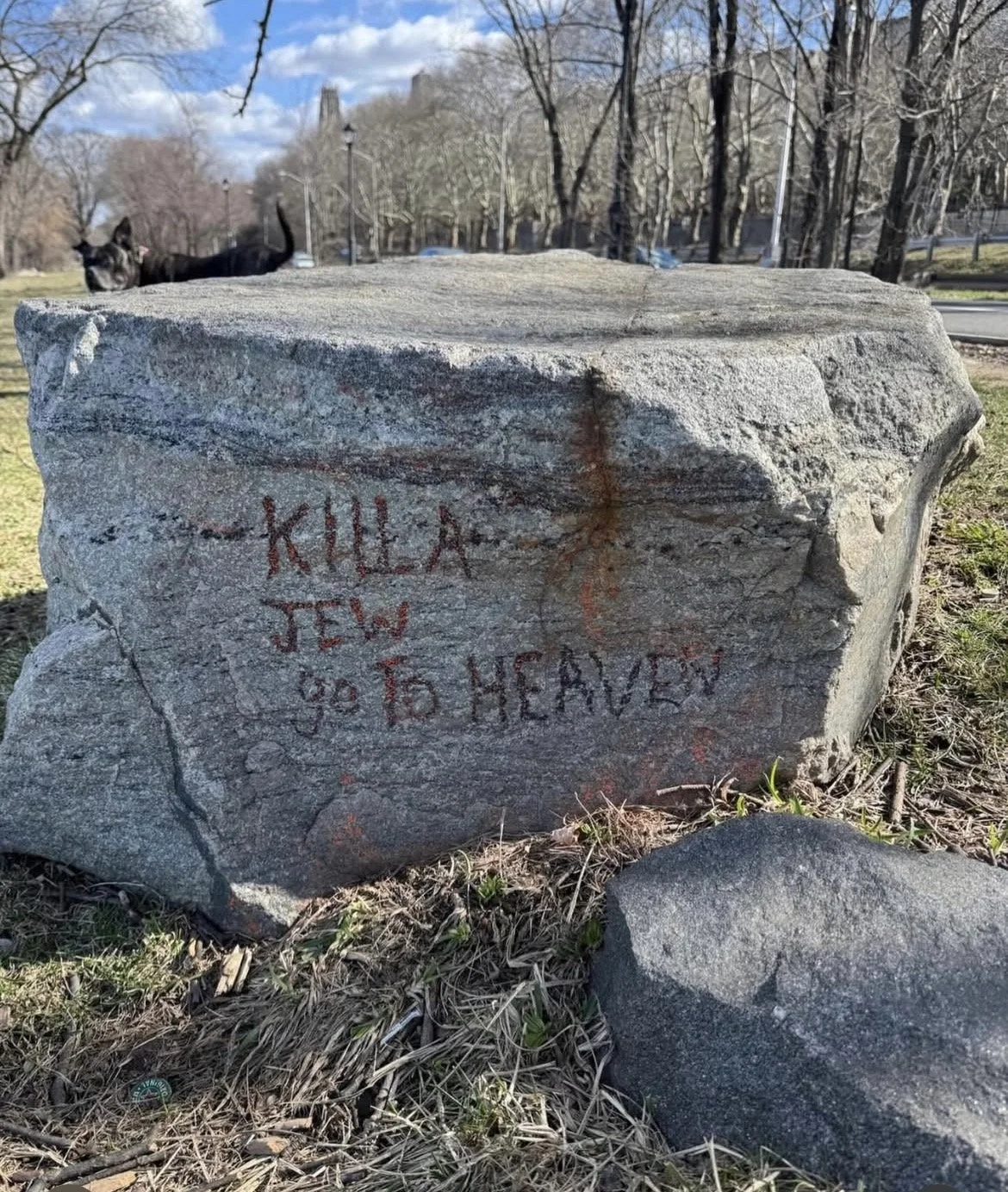
Riverside Park, NYC, March 2026
In recent years…
Synagogues and Jewish day schools have been shot at, bombed, or set on fire (at least 6 this month alone*)
Jewish cemeteries have been desecrated
Mezuzahs have been ripped from people’s doors
Jewish community centers and schools have been vandalized with swastikas and antisemitic graffiti
Jewish businesses have been targeted and harassed (some forced to close permanently as a result)
Holocaust memorials have been defaced
Jews of all ages have been assaulted in public spaces (stabbed, beaten, mugged)
Jewish institutions have received waves of bomb threats
Jewish and Israeli artists, scholars, and speakers have faced cancellations or exclusion
Jewish children’s schools and summer camps have received bomb threats and other security threats, leading to evacuations and lock downs
Jewish university students have been harassed, intimidated, threatened, kicked out of peer groups, and had their dorms graffitied with antisemitic slurs
Jews have been repeatedly warned to hide visibly Jewish symbols and avoid synagogues and other Jewish spaces for lack of safety
Between 2018 and 2025 at least 38 Jews have been murdered in the USA, Europe and Australia for being Jewish
In North America and Europe, many synagogues, Jewish schools, and community centers require significant security measures so Jews can safely pray, study, or gather. This includes armed guards, police escorts, security checkpoints, controlled entry, surveillance systems, and hardened buildings.
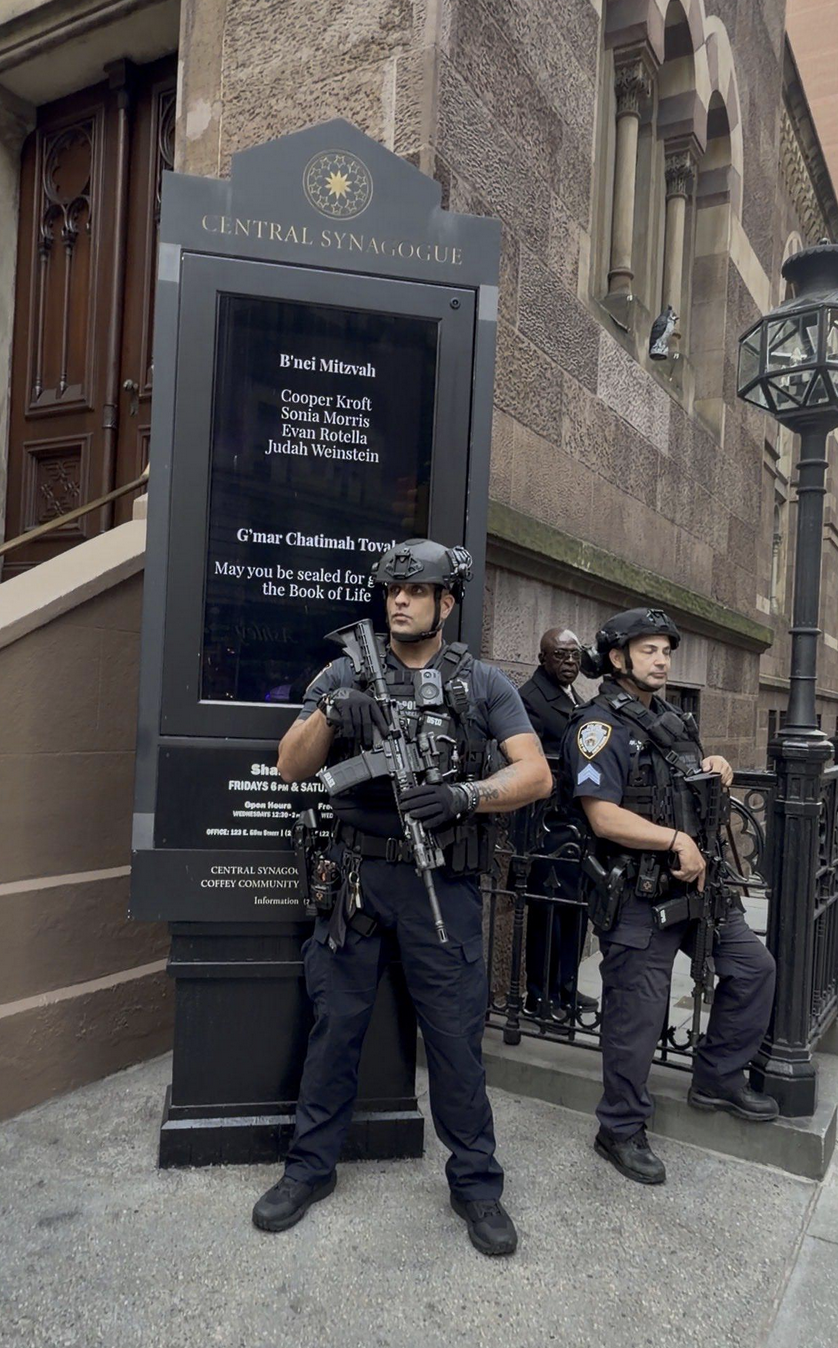
These incidents represent the tiniest snapshot of confirmed attacks and harassment.** It is not even close to a complete picture. Taken individually, they might appear isolated. Viewed together across countries and categories from physical attacks, vandalism, harassment, intimidation, exclusion and murder, they reveal a broader environment in which hostility toward Jews is increasingly normalized.
“I never thought in my lifetime that I’d have to deal with this kind of situation again.” –Holocaust survivor, Eva Nathanson
Holocaust survivors have been sounding alarm bells. In the last couple of years, survivors including Tova Friedman, Marian Turski, Leon Weintraub, and Eva Nathanson have publicly voiced alarm at the rise in antisemitism they are witnessing. They speak of “echoes of the past,” warning that the Holocaust did not emerge suddenly but grew out of rhetoric, propaganda, and social exclusion that many people initially dismissed. Some have said bluntly that what they are seeing today resembles how it began in the 1930s, while others have urged the public to take early warning signs seriously and “multiply efforts” to confront the ideas and hatred that historically paved the way for such catastrophe.
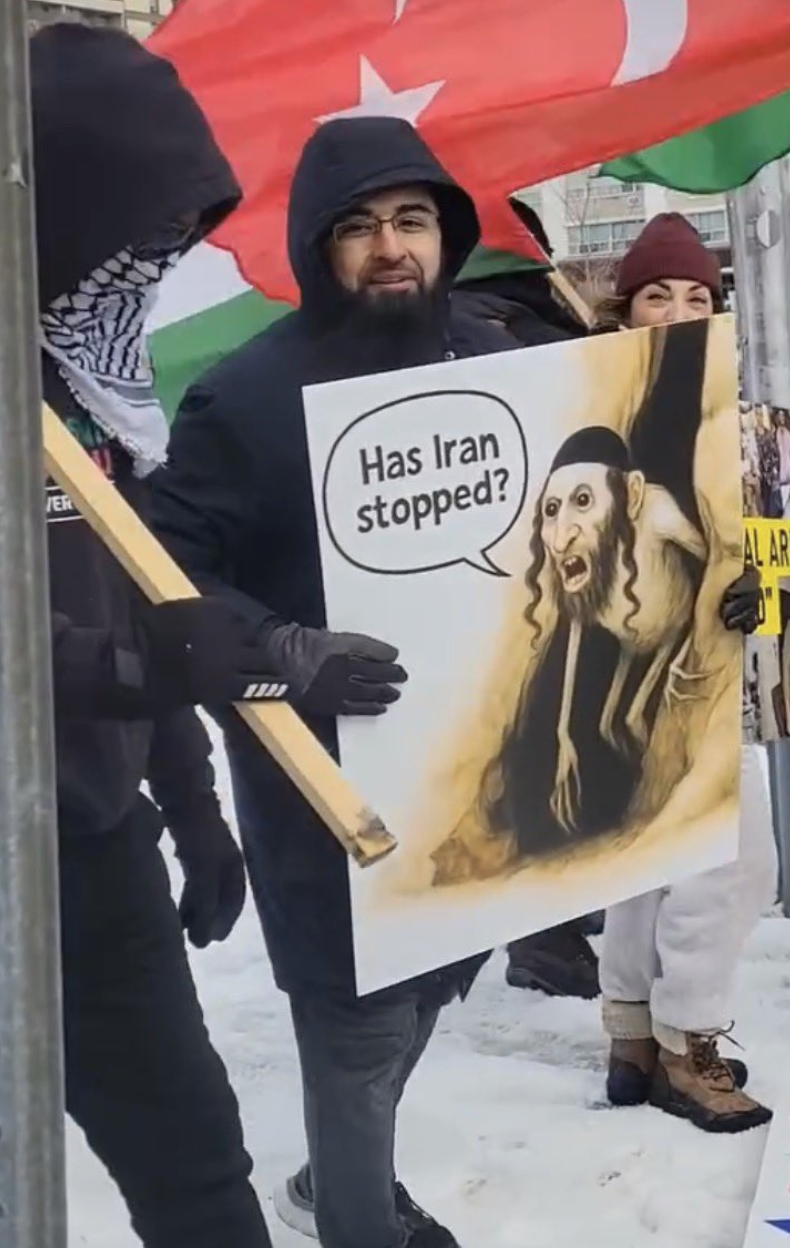
March 2026: Nazi-era antisemitic caricature imagery displayed at a protest in a Jewish neighborhood in Toronto, Canada
The medium today may be digital rather than printed pamphlets, but the pattern is familiar. The narratives now spread through memes, viral posts, podcasts, and coordinated online harassment. What once moved slowly through print now travels instantly across borders. The internet has allowed long-standing antisemitic narratives that were once confined to local movements or fringe publications, to circulate globally, amplifying and normalizing hostility toward Jews simultaneously in Europe, North America, the Middle East, Australia, and beyond. The result is an online environment where antisemitic hostility is not confined to fringe spaces but is increasingly visible, normalized, and rapidly amplified across digital platforms.
This has real world consequences as evidenced above.
We are at a pivot point in history, where the echoes of the past are sounding loudly in the present. Please don’t look away. Please don’t be one of the people who sits on the sidelines and watches without intervening.
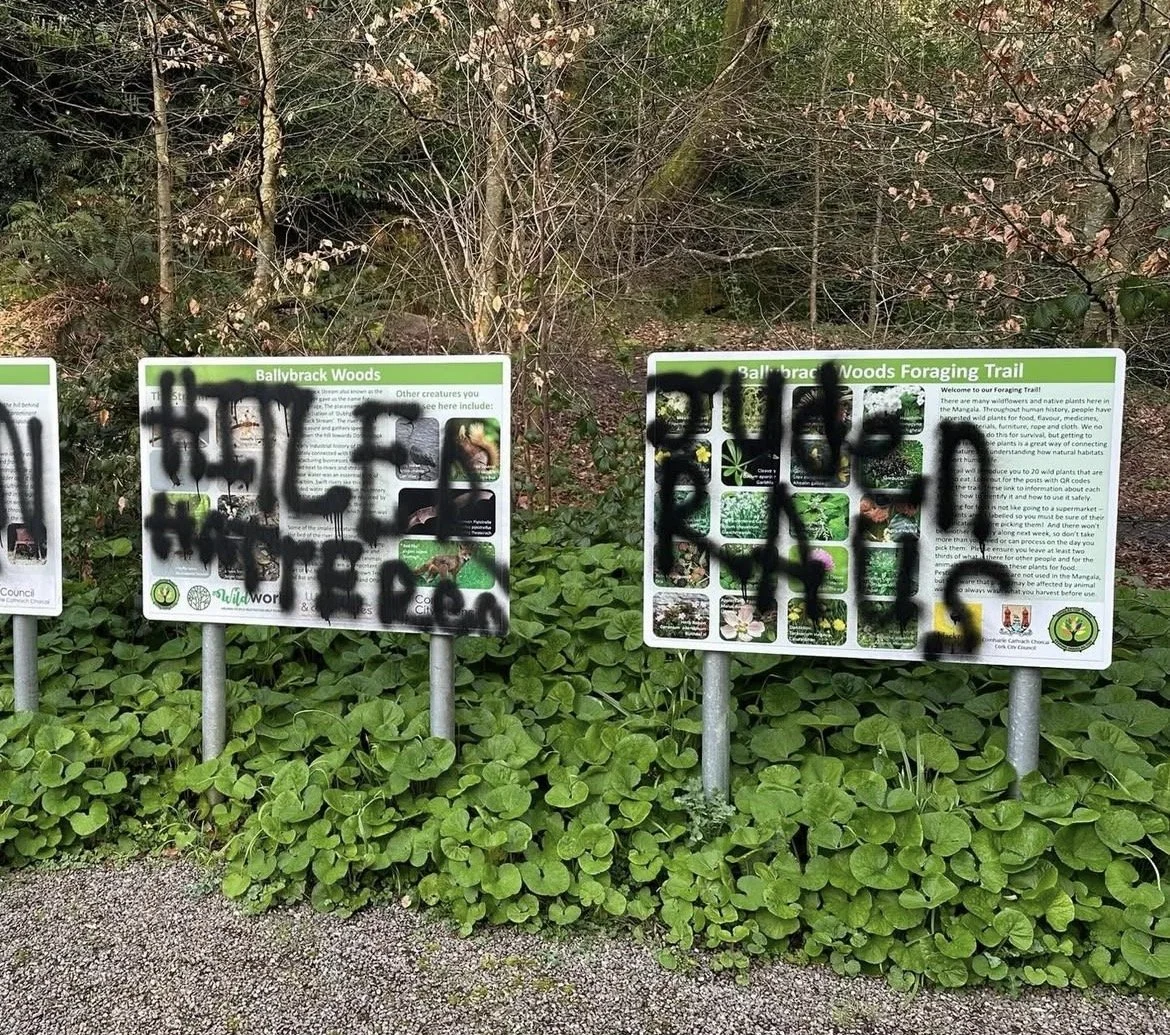
“Jews Out” Cork, Ireland, March 2026
*3/2/26 Temple Emanu-El, North York, Toronto, Canada
3//7/26 Beth Avraham Yoseph of Toronto (BAYT), Thornhill, Ontario, Canada
3/7/26 Shaarei Shomayim, North York, Toronto, Canada
3/9/26 Synagogue in Liège, Belgium
3/12/26 Temple Israel, West Bloomfield, Michigan, United States
3/13/26 Synagogue in Rotterdam, Netherlands
3/14/26 Cheider Jewish School, Amsterdam, Netherlands
**Many of these attacks remain largely unknown outside the communities where they occur. Incidents are often reported locally through police reports, regional news outlets, or Jewish community organizations and only the most extreme events receive sustained national or international coverage. As a result, the broader global pattern can be difficult to see unless someone is actively following monitoring groups such as the Anti-Defamation League, Community Security Trust, B'nai Brith Canada, Combat Antisemitism Movement, the Institute for the Study of Contemporary Antisemitism, or the Institute for the Study of Global Antisemitism and Policy, which track incidents regionally and maintain ongoing records of antisemitic harassment, vandalism, threats, and violence. Additionally, many incidents circulate through Jewish community networks themselves, where people share experiences of harassment, threats, or vandalism directly with one another long before they appear in broader public reporting.